
Global Investment Outlook: Dubai, London and New York Markets for the Rest of 2026
Al Barakah Investments Group
The Themes Defining the Rest of 2026
As 2026 moves into its final quarter, investors face a market environment shaped by a handful of clear themes: the path of interest rates, the persistence of inflation, currency movements, and the relative attractiveness of real assets. How these forces interact will determine the investment landscape across Dubai, London and New York for the remainder of the year and into 2027.
Interest-Rate Sensitivity
Interest rates remain the single most important variable for global real estate. After the sharp normalisation of 2023–2024, major central banks have moved at different speeds. The US Federal Reserve, the Bank of England and the broader monetary environment have each shaped their respective property markets in distinct ways. Where rates have stabilised, transaction volumes and mortgage availability have improved; where uncertainty persists, buyers remain cautious.
For property investors, the implication is clear: the cost and availability of finance materially affects asset prices and transaction activity. Markets less dependent on leverage — such as much of Dubai's cash-driven residential market — are less directly sensitive to rate moves than leverage-heavy segments in London and New York.
Inflation and Real Returns
Inflation erodes the real value of cash and fixed-income holdings, which is why real assets — including property — retain their appeal as part of a diversified allocation. However, inflation also raises operating costs, service charges and, in some jurisdictions, property taxes. Investors should distinguish between nominal price movements and real (inflation-adjusted) returns when assessing any market.
Currency Movements
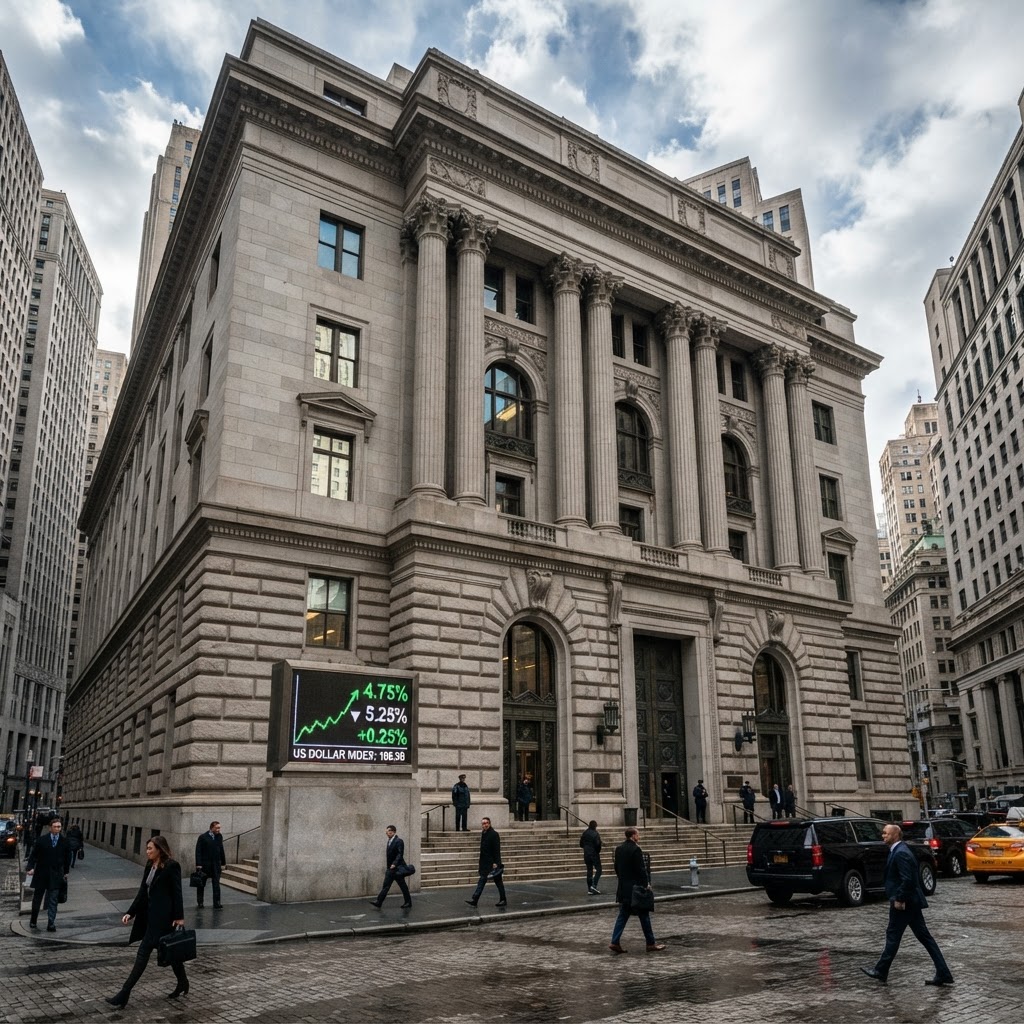
Currency is a powerful and often underappreciated driver of international investment returns. Sterling's relative value continues to influence London's attractiveness to dollar- and Gulf-currency-based buyers. The US dollar's direction affects the real returns of investors holding Dubai (pegged) or New York assets. For investors with multi-city portfolios, currency diversification is itself a form of risk management — but it also means returns must always be assessed in the investor's home currency, not only in the asset's local currency.
Real Estate in a Diversified Portfolio
Real estate remains a cornerstone of diversified portfolios for international families. Its roles are several:
- Income from rents in deep, professionalised rental markets.
- Capital preservation in transparent, legally secure jurisdictions.
- Inflation hedging, as rents and values can adjust over time.
- Diversification away from financial-market volatility.

The Relative Positioning of Dubai, London and New York
Each city occupies a distinct place in the current environment:
- Dubai continues to attract capital through population growth, infrastructure investment, USD-linked exposure and the absence of recurring residential property tax for most owners. Its risk is supply and cyclicality.
- London offers a stabilising rate environment, currency-driven entry opportunities for international buyers, and a deep, transparent market with structural rental demand. Its considerations are taxation and the pace of recovery.
- New York provides income, USD exposure and deep liquidity, with a bifurcated commercial segment rewarding quality assets. Its considerations are tax complexity and estate-planning needs for non-US investors.
Risk Management
In an environment where not all assets and markets move together, risk management matters more than ever:
- Diversify across cities, currencies and asset types.
- Stress-test assumptions on rates, rents and exit values.
- Maintain liquidity reserves for carrying costs and void periods.
- Take advice across all relevant jurisdictions before committing capital.
Looking Ahead
No forecast is certain. The remainder of 2026 will be shaped by decisions taken by central banks, by the trajectory of inflation, and by the relative movement of currencies. Investors who focus on fundamentals — occupier demand, location quality, transparent markets and disciplined structuring — are better positioned to navigate uncertainty than those who chase short-term narratives.
For a personalised view of how these themes affect your portfolio, contact our team or request a consultation.
Conclusion
The global investment outlook for the rest of 2026 is neither uniformly positive nor uniformly negative. It is a environment of differentiation — between markets, between asset qualities and between structures. Dubai, London and New York each offer distinct strengths and distinct risks. The investors most likely to navigate the period well are those who diversify thoughtfully, take proper advice and remain focused on long-term fundamentals rather than short-term noise.
This article is provided for general information only and does not constitute financial, investment, legal, tax or Shariah advice. Market values and investment returns can rise or fall. Investors should obtain independent professional advice before making any decision.