Dubai Off-Plan Property Investment: Opportunities, Risks and Due Diligence
Al Barakah Investments Group
A Structured Approach to Off-Plan Buying
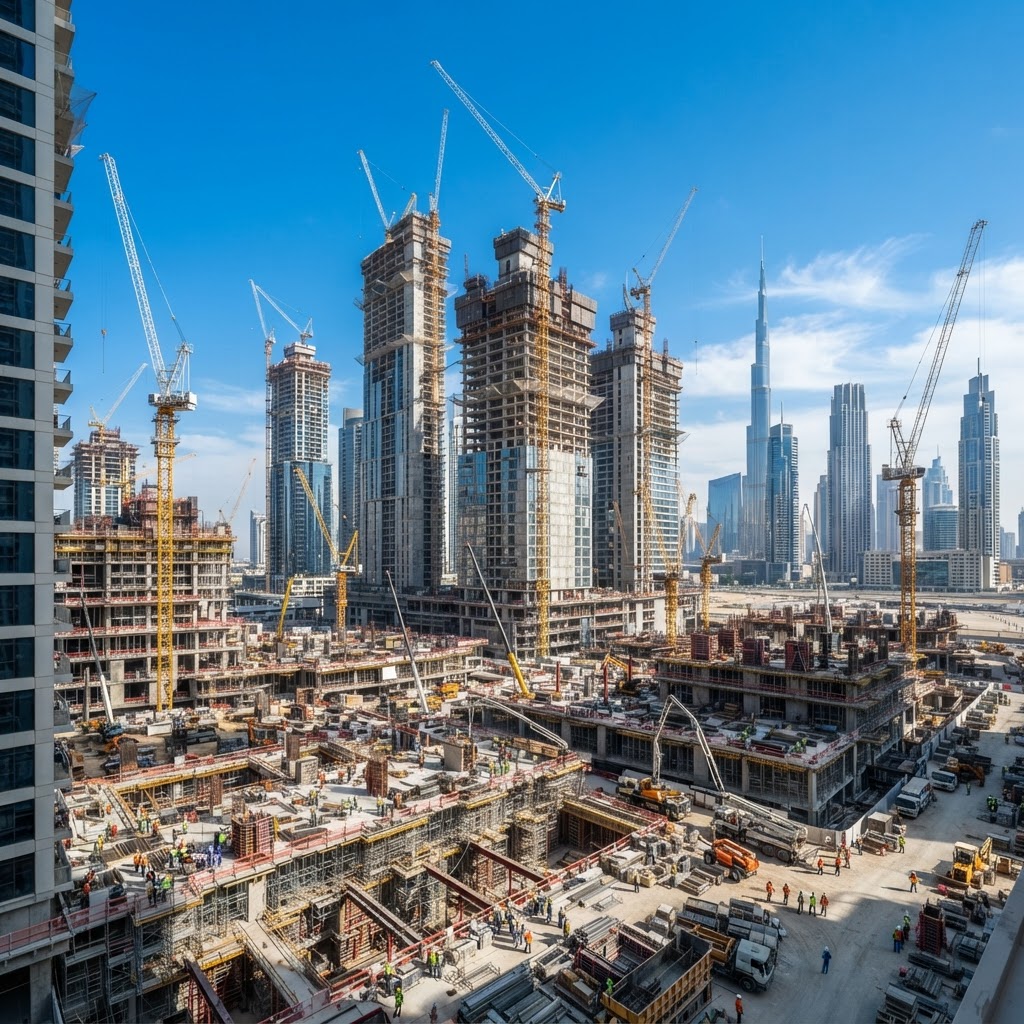
Off-plan purchasing — buying property before construction is complete — has become one of the most common entry points into Dubai real estate. It can offer extended payment plans, lower entry prices and access to prime plots before they reach the secondary market. But the structure also transfers risk to the buyer, and that risk must be managed deliberately.
Why Investors Choose Off-Plan
The appeal is straightforward. A typical Dubai off-plan payment plan spreads the purchase price across the construction period, often 40–60 months, which eases cash-flow pressure and allows investors to align capital deployment with their broader financial planning. For end-users, it offers a route into new, warrantied stock in communities that may not be available completed.
Developer Selection Is the First Filter
Not all developers are equal, and developer quality is the single most important variable in off-plan risk. Investors should assess:
- Track record of delivery. How many projects has the developer completed, and on what timeline?
- Financial strength. A developer with deep balance-sheet resources is less dependent on pre-sales to fund construction.
- Quality reputation. Visit completed projects and assess finish quality, facilities management and resale performance.
Established names such as Emaar and DAMAC, both of which feature in our developer profiles, have long delivery histories. Newer or smaller developers may offer attractive pricing but warrant additional scrutiny.
Escrow Protection
Dubai's regulatory framework requires off-plan payments to be held in project-specific escrow accounts, governed by the Dubai Land Department, and released to the developer only against verified construction milestones. This is a meaningful investor protection — but it relies on the developer complying with the framework. Always confirm that a project is registered and that payments are directed to the designated escrow account, not to a general corporate account.

Construction Milestones and Payment Timing
Understanding the link between construction progress and payment instalments is essential. A well-structured plan ties your payments to genuine, verifiable milestones. If payments are front-loaded relative to construction progress, the buyer carries more risk; if they are back-loaded or evenly spread, the developer carries more. Read the payment schedule alongside the construction programme before signing.
Location Analysis Beyond the Brochure
Off-plan marketing naturally emphasises future amenities and renderings. Investors should look past the imagery to fundamentals:
- Connectivity. Existing or confirmed metro, road and airport access.
- Supply pipeline. How much competing stock is being delivered nearby in the same window?
- End-user demand. Is the unit type suited to owner-occupiers, or is it primarily investor stock?
An area with a wave of new supply and limited end-user demand can weigh on rents and resale values for years.
Exit Risk and Liquidity
A frequent assumption is that off-plan units can be sold on (flipped) before completion. While assignment is sometimes possible, secondary-market liquidity for incomplete units is not guaranteed and depends on market conditions, developer consent and the stage of construction. Investors should enter off-plan with the intention and capacity to complete the purchase, treating any pre-completion exit as a possibility rather than a plan.

Long-Term Holding Strategies
Off-plan is often best understood as a long-term holding strategy. Upon completion, the property transitions into the rental market, where income and capital performance depend on occupier demand, community maturity and the quality of facilities management. A patient investor who completes, lets and holds can benefit from the community maturing around the asset — but returns are never guaranteed.
A Due-Diligence Checklist
- Verify developer registration and delivery history.
- Confirm the project is registered with the Dubai Land Department.
- Ensure payments are directed to the project escrow account.
- Read the Sales and Purchase Agreement carefully, including handover and defect-liability clauses.
- Assess location fundamentals and nearby supply.
- Plan for completion, not just for an early exit.
For tailored guidance on structuring an off-plan purchase within a wider portfolio, speak to our advisory team.
Conclusion
Off-plan buying in Dubai can be a powerful tool when used with discipline. The investors who fare best are those who treat it as a structured, long-term commitment rather than a short-term trade — selecting developers with proven delivery, insisting on escrow protection, scrutinising locations against future supply, and entering every transaction with the capacity to complete.
This article is provided for general information only and does not constitute financial, investment, legal, tax or Shariah advice. Market values and investment returns can rise or fall. Investors should obtain independent professional advice before making any decision.